
- End-stage renal failure with planned peritoneal dialysis
- Impossibility of hemodialysis due to technically inadequate vascular access
-
Indications
-
Contraindications
Patient is not suitable for peritoneal dialysis:
- Due to intra-abdominal adhesions or space-occupying lesions
- If proper handling of the catheter cannot be ensured
-
Preoperative Diagnostics
- Clinical examination: Exclusion of any hernias
- Medical history of abdominal previous operations and inspection of existing scars
- Abdominal ultrasound: Exclusion of tumors, assessment of the size of cystic kidneys and renal cysts
-
Special Preparation
![Special Preparation]()
1 Week Preoperatively
- No more heparin or insulin injections in the area of the abdominal wall to spare the surgical area and reduce the risk of infection.
Day Before Surgery
- Usual surgical preparation
- Enema the evening before
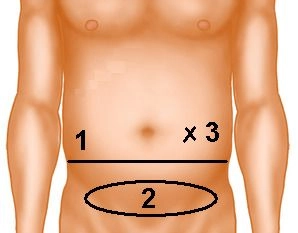
- Preoperative marking on the standing and sitting patient : Waistband (1), fat apron/fold (2), planned catheter exit (3)
Since CAPD is performed by the patient themselves, the catheter exit site must be easily visible to them. Therefore, the exit site must not be located at the level of the waistband (upper and lower clothing), skin folds, or below a fat apron. Since patients usually perform the dialysate exchange while sitting, the planned exit site should also be checked preoperatively while sitting.
Surgery Day
- Single-shot antibiotic before induction of anesthesia (e.g., Cefazolin)
- If necessary, urinary catheter for the duration of the operation.
-
Informed Consent
General Complications
- Injury to small or large intestine
- Injury to parenchymal organs
- Wound infection, abscess, peritonitis; follow-up interventions
- Intra-abdominal and/or abdominal wall bleeding
- Positioning injuries
- Thromboembolism
Specific Catheter Complications
- Catheter kinking
- Catheter malposition, leakages, cuff dislocation.
Anesthesia
Intubation anesthesia with relaxation of the abdominal wall musculature ... - Operations in ge
Intubation anesthesia with relaxation of the abdominal wall musculature ... - Operations in ge
Activate now and continue learning straight away.
Single Access
Activation of this course for 3 days.
US$9.20
inclusive VAT
Most popular offer
webop - Savings Flex
Combine our learning modules flexibly and save up to 50%.
from US$7.14 / module
US$85.75/ yearly payment
general and visceral surgery
Unlock all courses in this module.
US$14.29
/ month
US$171.50 / yearly payment
Webop is committed to education. That's why we offer all our content at a fair student rate.