
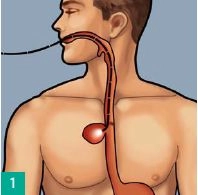
Leaks in the gastrointestinal tract occur after surgical procedures involving anastomosis, but also following endoscopic interventions such as dilations or removal of precancerous lesions or early carcinomas using endoscopic mucosal resection or submucosal dissection. The risk of postoperative leakage increases with the increased use of neoadjuvant therapy concepts in esophageal, gastric, and rectal carcinomas.
Esophageal anastomoses are created for reconstruction after esophageal resections and transhiatal extended gastrectomies. The insufficiency rate for esophageal anastomoses is reported in the literature to be between 0 and 30 percent, with mortality rates of up to 50 percent. The main cause of fatal outcomes in both anastomotic insufficiencies and perforations is the development of mediastinitis with the most severe septic clinical picture.