Start your free 3-day trial โ€” no credit card required, full access included

Perioperative management - Endovascular treatment of a penetrating atheromatous ulcer of the descending aorta (PAU, TEVAR)

  1. Indications

    Indications

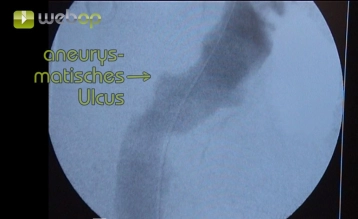
    This article demonstrates the endoluminal exclusion of a penetrating atheromatous ulcer (PAU, eccentric 32 x 24 mm) of the descending aorta. Due to two previous vascular surgical operations in the left groin and severe arteriosclerosis, an extraperitoneal exposure of the A. iliaca externa is performed.

    For an ulcer diameter or depth of ≥ 20 mm, elective endovascular treatment is indicated. In cases of signs of impending rupture (pain, extra-aortic blood), endovascular treatment is urgent. Pain is cited as one of the main criteria for urgent surgical intervention.

  2. Contraindications

    • none except ASA IV
  3. Preoperative diagnostics

    Thorough vascular surgical examination:

    • Pulse status
    • Doppler of the legs
    • if necessary, walking distance test with concurrent PAD and poorly palpable foot pulses
    • Abdominal ultrasound
    • Colour duplex of the carotids
    • Echocardiogram
    • Stress ECG
    • Laboratory investigations (electrolytes, coagulation, renal values, blood count, blood lipids, blood group)
    • Chest X-ray
    • Spiral CT of the thorax and abdomen
  4. Special Preparation

    • Determine blood type, provide blood products if necessary
    • Depilate the surgical area
    • Insert a bladder catheter if necessary
    • prophylactic antibiotic therapy is usually performed and is recommended by the German Society for Vascular Surgery (single-shot Cefuroxime 30 minutes before skin incision); however, the benefit is currently being debated due to the resistance issues (RKI).
  5. Informed consent

    General surgical risks

    • Allergy/intolerance e.g. to latex, medications; circulatory shock, intensive care measures; very rarely severe, possibly permanent damage (organ failure, brain damage, paralysis)
    • Wound infections: medication or surgical measures; sepsis
    • Thromboembolisms of the leg and pelvic veins, pulmonary embolism; prophylactic heparinisation → HIT II
    • Skin, tissue and nerve damage due to positioning and procedure-related measures
    • Keloids

    Specific procedure risks

    • Temporary fever
    • Vascular injuries due to advancement of catheters, stent prosthesis; surgical haemostasis, blood transfusions, immediate conversion to open surgery; donor blood → hepatitis, HIV
    • Post-operative bleeding, haematomas; possibly surgical measures
    • Injury to cutaneous nerves; sensory disturbances, possibly permanent
    • Leg oedema due to damage to the lymphatic vessels in the groin; compression stockings, in the case of chronic lymphoedema medication or physical measures (lymphatic drainage)
    • Aneurysm at arterial puncture sites or vascular fistula to the adjacent vein; seroma formation
    • Infections of the stent prosthesis: within days, months, also after years → endocarditis, sepsis; surgical removal of the infected prosthesis
    • Injury to adjacent organs due to fixation of the aortic prosthesis (oesophagus, intestine, lung) → surgical measures, possibly removal of the prosthesis
    • Malpositioning of the aortic prosthesis → possibly open surgical correction
    • Leakage of the aortic prosthesis → correction by clipping, extension of the existing prosthesis, possibly also open correction
    • Side effects from iodine-containing X-ray contrast media → temporary impairment of renal function, rarely permanent damage (dialysis), possibly hyperthyroidism
    • Potency disorders in men: rarely erectile dysfunction, possibly permanent

    Risks from insufficient blood flow

    • Extremities: due to occlusion of the stent prostheses and adjacent vascular segments by thrombi, perfusion disturbances of the limbs; repeat surgical intervention, possibly amputation
    • Kidneys: impairment of renal function due to thromboembolisms → surgical correction, temporary or also permanent dialysis
    • Intestine: due to thromboembolism or misplacement of the vascular prosthesis; surgical intervention, intestinal resection, possibly (permanent) colostomy
    • Spinal cord: transient sensory disturbances and paralysis of the legs, possibly permanent paraplegia
    • Stroke: due to thromboembolism → paralysis, hearing, speech or visual disturbances, possibly loss of speech, deafness, blindness
    • Liver: functional impairment with 'jaundice', especially in pre-existing liver disease
Anaesthesia

GA with ETI ... - Operations in general, visceral and transplant surgery, vascular surgery and thor

Activate now and continue learning straight away.

Single Access

Activation of this course for 3 days.

US$9.30  inclusive VAT

Most popular offer

webop - Savings Flex

Combine our learning modules flexibly and save up to 50%.

from US$4.30 / module

US$51.61/ yearly payment

price overview

vascular surgery

Unlock all courses in this module.

US$8.60 / month

US$103.20 / yearly payment

to top