Start your free 3-day trial — no credit card required, full access included

Perioperative management - Hemithyroidectomy

  1. Indications

    • Procedures to clarify the dignity of neoplasms of uncertain behavior of the thyroid are primarily indicated as lobectomy in thyroid surgeries, far ahead of symptom-oriented surgery for nodular goiter, procedures for hyperthyroidism, or confirmed malignancy. The number of procedures for suspicious malignant nodules is high with only a low detection rate.

      Note: Since completion surgery after subtotal resection is associated with a high complication rate, hemithyroidectomy is generally required for clarification of suspicious thyroid nodules.

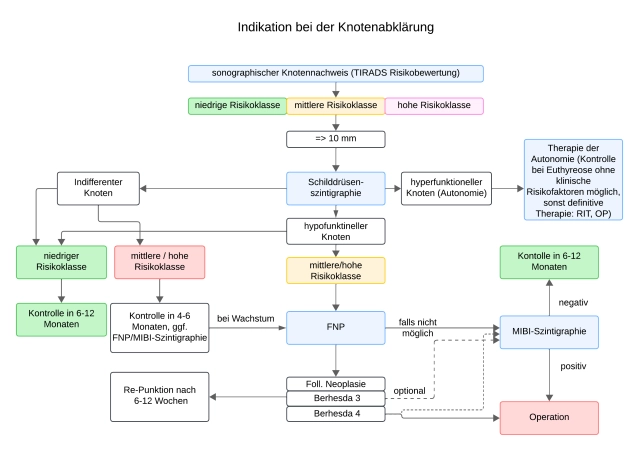
      • Nodules with sonographic features of a higher risk of malignancy (EU-TIRADS [European Thyroid Imaging and Reporting Data System] category 4-5) LINK TIRADS
      • In case of a positive or suspicious fine needle aspiration result with follicular neoplasm or suspicion of malignancy in cytology (from Bethesda stage 3/4) LINK Bethesda Classification
      • Unclear nodule after radiation of the neck region or radiation exposure
      • NIFTP (Non-Invasive Follicular Thyroid Neoplasm with Papillary-like Nuclear Features) = Non-invasive encapsulated follicular neoplasm with papillary nuclear features of PTC, very low malignancy potential (borderline tumor), lobectomy sufficient, no radioiodine therapy necessary
         
    • large unifocal autonomy

    Differentiated thyroid carcinomas can be adequately treated by hemithyroidectomy under certain circumstances:
     

    • Papillary thyroid microcarcinoma (PTMC) (T1a) (tumor diameter of 10 mm or smaller)

      Notes: In justified cases, hemithyroidectomy can be a therapeutic strategy for PTC. A thyroidectomy for papillary microcarcinoma is necessary or sensible if there is a high risk for multifocal, aggressive, or metastatic tumor biology, or if complete follow-up (e.g., via thyroglobulin) or radioiodine therapy is sought.

      Risk factors:
      • Multifocality or bilateral tumors
      • extrathyroidal extension
      • Aggressive subtypes of PTC (including the tall cell, columnar cell, and hobnail variants)
      • Proximity to critical structures (trachea, recurrent laryngeal nerve)
      • Genetic predisposition (syndromic disease) or familial clustering
      • Suspicion/proof of lymph node and/or distant metastases
      • previous cervical radiation

    Active Surveillance

    If a solitary papillary microcarcinoma is confirmed by FNA and no risk factors are present, an observation strategy may be an alternative to lobectomy for patients over 30 years old.

    This strategy is safe and evidence-based, particularly through studies from Japan and the USA, which have shown that many of these small tumors never grow clinically relevant or metastasize.

    Nevertheless, the patient should be informed about the risk of potentially necessary extended resection (e.g., thyroidectomy instead of hemithyroidectomy and possibly additional lymphadenectomy) in case of tumor progression, as well as the nature, extent, and duration of the necessary structured follow-up. Additionally, information about the established surgical therapy should be provided. The recommendation for conservative therapy should be supported by an interdisciplinary tumor board, documented in writing, and explained to the patient.

    • Papillary thyroid carcinoma (PTC) (T1b, T2)
      • In justified cases, hemithyroidectomy can be a therapeutic strategy, provided no risk factors as mentioned above are present.
    • low-risk follicular carcinomas
      • Minimally invasive (limited capsular invasion ± minor angioinvasion (< 4 vessels)
      • no distant metastases (M0)
      • no extrathyroidal extension, tumor completely intrathyroidal
      • Size ≤ 4 cm
      • Unifocality
      • No lymph node metastases (N0)
      • No familial burden or MEN syndromes

    Note: Since a follicular thyroid carcinoma cannot usually be adequately assessed in terms of invasiveness of the tumor capsule and vessels in a frozen section, total thyroidectomy, as long as the other criteria mentioned above are met, does not represent the primary procedure. In the histological diagnosis of diffuse capsular invasion or angioinvasion > 3 vessels, a staged completion thyroidectomy with postoperative 131I therapy should be performed.

    • undifferentiated (anaplastic) carcinomas (UTC) limited to the thyroid
      • in case of unilateral involvement (T4a N0/1 M0/1) plus adjuvant chemotherapy
    • Sporadic unifocal MTC
      • without or with slight exceeding of the thyroid capsule, no to slight desmoplasia, and clinically no further tumor suspicion and basal normal calcitonin level.

    Note: The intraoperative frozen section determines whether a limited resection is appropriate. R0 resection must be confirmed, and the risk of metastasis must be assessed.

    Key criteria for the risk of metastasis are the evidence of thyroid capsule breakthrough and a desmoplastic stromal reaction (desmoplasia, cut-off value at 10%). The degree of desmoplasia of the primary tumor is highly associated with lymph node metastasis.
    LINK TNM Classification

  2. Contraindications

    • Manifest hyperthyroidism: Before elective thyroid surgery, the patient must be euthyroid to minimize the risk of a thyrotoxic crisis.LINK Hyperthyroidism
    • Cardiopulmonary risk assessment
    • General anesthesia intolerance
    • Coagulation disorder or use of anticoagulants

    Guidelines recommend an individual benefit-risk analysis before elective surgeries: If the operative bleeding risk clearly outweighs the potential cardiovascular benefit, aspirin therapy should be interrupted.
    In cases of higher-grade anticoagulation such as P2Y12-ADP receptor antagonists (e.g., Clopidogrel), NOACs (e.g., Xarelto), or vitamin K antagonists (e.g., Falithrom or Marcumar), an interdisciplinary consultation should develop a therapeutic plan regarding the indication for anticoagulation, the possibility of bridging with heparin, and the operative bleeding risk.

    • An asymptomatic nodular goiter and a scintigraphically hypofunctioning ("cold") nodule without suspicion of malignancy are not indications for surgery.
  3. Preoperative Diagnostics

    Medical History

    • local symptoms of thyroid enlargement, nodule growth (cervical pressure or globus sensation, swallowing difficulties, and dyspnea, especially under exertion)
    • voice changes/hoarseness, recurrent laryngeal nerve palsy
    • symptoms of hyperthyroidism
    • medications (iodine-containing preparations, antithyroid drugs)
    • family history
    • previous radiation in the neck area: A confirmed etiological factor for the development of differentiated thyroid carcinoma is exposure to ionizing radiation, which is why patients with thyroid nodules should be specifically asked about previous radiation to the head-neck region.
    • pre-existing cervical spine problems (head reclination during positioning!)

    Physical Examination

    • palpation (size, consistency of thyroid lobes, nodules, swallowing mobility, palpable lymph nodes)

    Vocal Cord Function Test

    • A preoperative ENT laryngoscopy to assess vocal cord mobility is essential.
    • It can detect pre-existing damage to the recurrent laryngeal nerve, e.g., after previous surgery or in malignancy.
    • It allows for a situation-adapted surgical strategy.
    • It is the basis of perioperative quality assurance.
    • Pre- and postoperative laryngoscopy and intraoperative neuromonitoring form the basis of perioperative quality assurance and are an inseparable diagnostic unit. Neuromonitoring is not usable without knowledge of clinical laryngeal function! LINK IONM

    Laboratory Tests

    • usual preoperative laboratory parameters depending on the underlying disease, coagulation, calcium, PTH
    • TSH, thyroid hormones: fT3, fT4
      The most important in-vitro parameter is TSH, whose pathological change indicates a long-standing thyroid dysfunction: Low concentration suggests hyperthyroidism, high concentration suggests hypothyroidism. In these cases, additional determination of thyroid hormones (fT3 and fT4) is mandatory; if TSH is normal and clinical euthyroidism is present, it can be omitted.
    • Thyroid antibodies for the diagnosis of immunothyropathy and thyroiditis

      • Antibodies against TSH receptor (TRAK) should be determined if clinical examination and imaging do not clearly differentiate between Graves' disease and non-immunogenic hyperthyroidism.
      • Antibodies against thyroid peroxidase (anti-TPO) are determined when autoimmune thyroid disease is suspected; they are elevated in 95% of patients with Hashimoto's thyroiditis (autoimmune thyroiditis) and in 70% of patients with Graves' disease.
      • Antibodies against thyroglobulin (anti-TG) are less specific, determined additionally when autoimmune thyroiditis is suspected, especially if anti-TPO is negative
         
    • Determination of basal calcitonin level
      Calcitonin (Ctn) is a highly specific tumor marker for medullary thyroid carcinoma (MTC). German guidelines recommend a one-time determination before any thyroid surgery to detect C-cell changes at an early stage. The level of basal calcitonin allows conclusions about the stage of the disease and helps plan the extent of resection. 
      A threshold of ≥ 30 pg/ml Ctn for women and ≥ 60 pg/ml for men indicates a high probability of MTC, justifying further treatment steps.
      Lymph node metastases in the lateral lymph node compartment appear only at a calcitonin level above 85/100 pg/ml and simultaneous evidence of desmoplasia. Otherwise, lateral lymph node dissection can be omitted. 25% of tumors are familial, e.g., lead tumor in MEN 2a. Therefore, molecular genetic clarification is always recommended in suspected MTC.

    Note: Smoking, proton pump inhibitors, renal insufficiency, and chronic alcohol consumption can lead to slightly to moderately elevated calcitonin levels (control under abstinence if necessary).

    Ultrasound with TI-RADS Classification (Thyroid Imaging Reporting and Data System)

    Preoperative neck ultrasound plays a significant role in surgical planning. It is the basic examination method for assessing thyroid morphology.

    Standardization of thyroid nodule findings allows for assessment of dignity or risk stratification of the nodule, as required by guidelines.

    Nodular findings of the thyroid are described in detail with documentation of the following criteria:

    • size (diameter in all 3 planes)
    • echogenicity (hypoechoic, isoechoic, hyperechoic, anechoic, and complex echo)
    • cystic components
    • micro- or macrocalcifications
    • presence of a hypoechoic halo (halo sign)
    • margin definition (sharp versus blurred)
    • configuration (asymmetric, "taller than wide")
    • vascularization

    The following sonographic criteria are associated with a significantly increased likelihood of malignancy:

    • hypoechogenicity
    • blurred margins
    • non-oval shape
    • "Taller-than-wide" shape: nodule is more pronounced in depth than in width in axial section.
    • presence of microcalcifications

    LINK TIRADS

    Note: Ultrasound can also assess the relationship to neighboring structures, lymph node status, and possibly retrosternal extension.

    Thyroid Scintigraphy

    Scintigraphy with the tracer 99m-technetium pertechnetate (Tc-99m) has a discrimination limit of about 1cm for lesions that are either more, equally, or less storing than the surrounding tissue and thus described as scintigraphically warm/hot (with simultaneous suppression of surrounding tissue), indifferent, or cold.

     Notes:

    • The scintigraphy, together with ultrasound, is the basic examination method in the evaluation of thyroid nodules.
    • Autonomous areas that are no longer subject to regulatory control by TSH can be unmasked by suppression scintigraphy (by orally administered thyroxine).
    • Even with a normal TSH value, functionally autonomous nodules may be present. These should not be biopsied.
    • Scintigraphically cold nodules that are sonographically anechoic correspond to cysts and are considered benign.
    • Non-anechoic cold nodules require clarification.

    Optional Preoperative Diagnostics

    Magnetic Resonance Imaging/Native Computed Tomography

    • In retrosternal goiter, to assess the extent of the retrosternal portion, facilitating preoperative planning of a possibly necessary thoracic surgical approach (sternotomy).
    • in cases of pronounced local compression symptoms
    • in cases of organ-overlapping growth

    Note 1: These two examinations have no role in the initial assessment of thyroid nodules.

    Note 2: In differentiated thyroid carcinoma (DTC), MRI should be preferred to avoid contrast medium exposure.

    Computed tomography has the disadvantage that contrast medium should be avoided, due to the risk of iodine-induced hyperthyroidism and to prevent iodine contamination concerning radioiodine therapy. After exogenous iodine intake, iodine receptors are blocked for a long period, making radioiodine therapy and thyroid scintigraphy impossible.

    PET-CT

    • Molecular whole-body imaging in advanced tumors for recurrence and metastasis diagnostics with functional tracers such as dopamine (18F-DOPA), somatostatin analogs (68Ga-DOTATOC) in MTC, and fluorodeoxyglucose (18F-FDG) in PDTC (Poorly Differentiated Thyroid Carcinoma), which often does not store radioiodine.

    Scintigraphy with ⁹⁹ᵐTc-MIBI with Washout Index as a Semi-Quantitative Method

    For assessing the dignity of thyroid nodules, sestamibi scintigraphy is used clinically off-label. Off-label use must be disclosed. MIBI scintigraphy should only be used for scintigraphically hypofunctional nodules ≥ 1cm in size and suspicious sonomorphology (TIRADS 4 and 5) and evidence of follicular neoplasia (Bethesda 3/4).

    Imaging with ⁹⁹ᵐTc-MIBI can be used particularly when fine needle aspiration is indicated but not possible or has not yielded conclusive results.

    The predictive negative value with rapid washout is good; follow-up controls are required.

    Fine Needle Aspiration Cytology

    Based on clinical, sonographic, and scintigraphic criteria, risk nodules are identified, which are then further clarified by fine needle aspiration. Since multinodular thyroid changes are common in Germany, it is advisable to limit the need for aspiration to non-autonomous nodule areas >1 cm – depending on sonographic features.
    Fine needle aspiration (FNA) of a suspicious thyroid nodule serves to estimate the risk of malignancy. It is particularly indicated when non-surgical treatment of the lesion is considered.

    In the following scenarios, an indication for aspiration of thyroid nodules may arise:

    • patients with clinical signs of thyroid carcinoma, when cytological diagnosis is important for surgical planning.
    • nodules depending on size from EU-TIRADS classification class 3: class 3 (> 2 cm), class 4 (> 1.5 cm), class 5 (> 1 cm)
    • nodules of any size with extracapsular growth or unclear cervical lymph nodes (here, the lymph node should also be aspirated if necessary)
    • nodules of any size in patients with a history of neck radiation without evidence of autonomy
    • first-degree relative of a patient with papillary or medullary thyroid carcinoma or multiple endocrine neoplasia type 2

    Note: In MTC, Ctn determination is superior to cytology. Due to the special importance of calcitonin screening, FNA is generally not required for the preoperative diagnosis of MTC. The assessment of a desmoplastic stromal reaction in histology is no longer reliably possible after FNA, so FNA should not be performed if Ctn is elevated.

    Aspiration should be explicitly avoided in nodules that correspond to scintigraphically focal autonomies, as well as in nodules that do not exhibit any sonographic criteria suspicious for malignancy. 

    Cytologically, many tumor entities can be diagnosed with high accuracy. Follicular neoplasia requires histological clarification.

    The indication for surgery is based on cytology in cases of follicular neoplasia, detection of specific mutations, or other indications or evidence of malignancy.

    Detection of benign findings in FNA can avoid unnecessary surgeries. Detection of malignant cells significantly influences the surgical strategy (hemithyroidectomy versus thyroidectomy, extent of lymph node dissection).

    In encapsulated follicular tumors, differentiation between follicular adenoma and carcinoma is not possible with FNA. Similarly, FNA cannot distinguish between a non-invasive encapsulated follicular variant of a papillary thyroid tumor (NIFTP) and a papillary thyroid carcinoma. Molecular pathological additional investigations can increase the sensitivity and specificity of FNA but are not yet routinely used.

    The most common papillary carcinoma, accounting for over 80% of all differentiated thyroid carcinomas, can be diagnosed with high reliability.

    Cytopathological Evaluation of FNA

    The Bethesda classification is a 6-grade system designed exclusively for thyroid aspiration and is largely evidence-based. The advantage of this system lies in the clear assignment of malignancy probability in the individual groups. Moreover, this classification allows for international comparability due to its international use.

    LINK Bethesda Classification

    57-SD-Knoten

    In suspected transmural infiltration, additionally panendoscopy, tracheoscopy, and esophagoscopy

  4. Special Preparation

    Euthyroidism

    • no special preparation

    Hypothyroidism

    Hyperthyroidism
    Every patient with hyperthyroidism undergoing elective thyroid surgery should have a stable euthyroid metabolic state before the operation.

    • The safest method is the administration of an antithyroid drug over several weeks.
    • In cases of manifest hyperthyroidism, additionally block iodine with short-term administration of high-dose iodide (Plummer's) 5-10 days preoperatively to inhibit hormone release from the thyroid, reduce thyroid perfusion (less bleeding risk), and prevent a thyrotoxic crisis during surgery. Always after initiating medical thyrostatic treatment, otherwise risk of iodine-induced hyperthyroidism.
    • In mild forms of hyperthyroidism, a few days of treatment with beta-blockers may be sufficient.

    Information on preoperative treatment of hyperthyroidism can be found at: 
    LINK Hyperthyroidism

    increased cardiopulmonary risk

    • Assessment of surgical risk through further diagnostics (stress ECG, heart echo, coronary angiography, lung function)

    Intraoperative Frozen Section

    • One-stage primary surgery requires preoperative fine needle aspiration cytology and/or the possibility of intraoperative frozen section diagnosis.
    • The intraoperative frozen section cannot reliably predict the malignancy of encapsulated tumors. The diagnosis of a PTC in the frozen section is possible if pronounced papillary structures and typical cell nuclei are visible – however, it is often uncertain, especially in small or atypical tumors. The frozen section can guide surgical strategy but does not replace the final diagnosis in the paraffin section.
    • The metastatic potential/lymph node metastasis potential in MTC can be assessed intraoperatively histopathologically by the extent of intratumoral desmoplasia (desmoplastic stromal reaction) and the breach of the thyroid capsule. MTC without desmoplasia do not show lymph node metastases.
  5. Informed consent

    • Bleeding/Postoperative bleeding/Hematomas
    • Wound infection/Wound healing disorder
    • Thromboembolism
    • Position-related cervical spine complaints
    • Vocal cord paralysis/Dysphonia
    • Dysphagia
    • Hypocalcemia requiring substitution and follow-up checks
    • Permanent hypoparathyroidism
    • Thyroid hormone substitution
    • Need for radioiodine therapy under exogenous or endogenous TSH stimulation
    • Tumor follow-up care

    For large goiters extending into the mediastinum and before reoperation, rare complications should also be mentioned:

    • Injuries to the sympathetic nervous system (Horner's syndrome)
    • Injuries to the trachea or neck vessels
    • Injury to the esophagus, pleura with tension pneumothorax, thoracic duct with chyle fistula
  6. Anesthesia

    • Intubation anesthesia for thyroid surgeries LINK
  7. Positioning

    Positioning
    • Supine positioning with moderate head reclination (beware of cervical spine issues, then avoid reclination)
    • left arm positioned alongside
  8. OR Setup

    OR Setup
    • The surgeon starts the operation on the right side of the patient and then moves to the left side.
    • The first assistant stands at the head end.
    • The scrub nurse is on the left (at abdominal level).
  9. Special Instruments and Retention Systems

    • Vessel sealing devices (“VS devices”): VS devices help optimize the safety and technical efficiency of thyroid surgery. They reduce blood loss, minimize the risk of hematomas and postoperative bleeding. They enable rapid and bloodless dissection, thereby shortening the operation time. Smaller incisions lead to more cosmetically pleasing results.
      Typical risks associated with the use of these devices arise from heat development near sensitive structures. Generally, a distance of 2–3mm during activation is sufficient.
    • Hooks: Four-prong, small Roux hooks; possibly special retraction systems instead of the second assistant
    • Clamps: fine Overholt clamps, small Pean clamps
    • Suture material: absorbable braided 3-0, 4-0; possibly non-absorbable monofilament thread 5-0 for ligating tissue remnants near the larynx, absorbable skin suture, possibly clips
    • Neuromonitoring equipment, also vessel loop for retracting the vagus nerve
    • possibly Redon drain CH 8
    • recommended: surgical loupes for the surgeon
  10. Postoperative Treatment

    Postoperative Analgesia

    • NSAIDs, possibly also opioid-containing analgesics

    Follow the link here to PROSPECT (Procedures Specific Postoperative Pain Management).

    Follow the link here to the current guideline Treatment of acute perioperative and post-traumatic pain.

    Medical Follow-up:

    • Close clinical monitoring in the first 4 to 6 postoperative hours to detect/exclude bleeding.
    • Removal of any Redon drains on the first postoperative day
    • Laryngoscopy before discharge, but no later than 7 days after discharge
    • Laboratory Tests
      • Serum calcium and parathyroid hormone levels 12-24 hours postoperatively to detect parathyroid dysfunction and initiate early medical therapy.
        Note: Hypocalcemia after hemithyroidectomy is very rare!
      • In case of hypocalcemia symptoms, serum calcium levels < 2.00 mmol/l, or PTH < 15 pg/ml, oral substitution with calcium 3 x 1 g and calcitriol 2 x 0.5 µg per day for 14 days.
      • The PTH level correlates best with the need for calcium/vitamin D substitution. PTH ≥15 pg/ml allows safe discharge, PTH < 10 pg/ml requires calcium/vitamin D substitution, PTH between 10 and 15 is a gray area, follow-up 48 hours postoperatively for a safe assessment is advisable, substitution should be continued until then.
      • Close monitoring to prevent iatrogenic hypercalcemia. Gradual tapering of substitution is preferable.
      • Thyroid Hormone Substitution
        Normally not required after hemithyroidectomy, TSH target value is 0.5 to 2.0 mU/l.

    Thrombosis Prophylaxis:

    The need for thrombosis prophylaxis in thyroid surgery depends on individual risk.

    • For low risk (young patient, no risk factors, short surgery), no routine medication prophylaxis is recommended, but early mobilization is advised.
    • Increased risk (age > 60 years, obesity, coagulation disorder, previous DVT, longer surgery duration) requires pharmacological prophylaxis with low molecular weight heparin (LMWH) or fondaparinux, usually starting in the evening pre- or postoperatively, with early mobilization (preferably on the day of surgery or the first postoperative day).
    • Duration of prophylaxis is generally until full mobilization, usually 1 – 5 days postoperatively
    • The decision on thrombosis prophylaxis strongly depends on the individual risk profile, not automatically on the type of surgery.
    • Careful consideration of thrombosis versus bleeding risk! Overly aggressive anticoagulation should be avoided.
    • Consider: Kidney function, HIT II (history, platelet control)
      Follow the link here to the current guideline: Prophylaxis of venous thromboembolism (VTE)

    Mobilization: already on the day of surgery

    Physical Therapy: for posture-related cervical spine complaints, possibly physical measures 

    Diet Progression: full diet on the day of surgery

    Bowel Regulation: generally not required

    Discharge: possible from the 2nd postoperative day if uncomplicated

    Work Incapacity: varies individually, approximately 10-14 days after discharge

    Completion Surgery

    Due to the lack of pre- and intraoperative identification possibilities of FTC, the question of completion surgery with adjuvant radioiodine therapy arises after the postoperative histological diagnosis, considering the risk of tumor persistence or recurrence. Surgery is indicated in the presence of distant or lymph node metastases, a widely invasive FTC, or evidence of angioinvasion (≥ 4 vessels). Risk factors include a size ≥ 4 cm, age > 55 years, and incomplete tumor resection.

    If the completion surgery includes the previously operated side, the procedure is recommended within 4 days or at an interval of 3 months after the initial surgery. In case of incomplete primary tumor resection, surgery should be performed promptly.

    In the case of only contralateral surgery after hemithyroidectomy during the initial procedure, current data show no evidence of increased complication risk. Due to scarring/adhesions ventrally, a primary lateral approach is recommended for completion. Completion surgeries without the use of IONM are not recommended.

    If an MTC is found incidentally, completion surgery can be omitted if calcitonin is not elevated in the first 2 weeks after resection and genetic testing excludes hereditary MTC.