

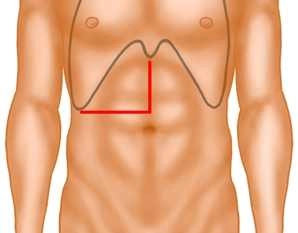
The abdomen is opened by a median upper abdominal laparotomy, which is extended horizontally to the right supraumbilically. After draping the wound edges with abdominal towels, a pulley system with a Mercedes retractor is applied.
-
Access
![Access]()
Soundsettings -
Findings collection; Adhesiolysis; Preparation of the extrahepatic pericyst in the left liver lobe
![Findings collection; Adhesiolysis; Preparation of the extrahepatic pericyst in the left liver lobe]()
Soundsettings Typically, the cysts show massive adhesions to the surroundings. Initially, the adhesions of the left-sided cyst to the omentum are dissected. Accidental opening of the cysts must be strictly avoided. Then it becomes apparent that the pericyst is adherent to the gastric antrum. These adhesions are now carefully dissected, sometimes using Overholt clamps.
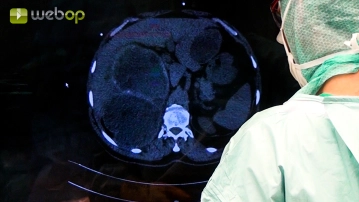
Puncture and aspiration of the cyst contents
Once the pericyst protruding over the liver surface is dissected free, it is initially surrounded w
Once the pericyst protruding over the liver surface is dissected free, it is initially surrounded w
Activate now and continue learning straight away.
Single Access
Activation of this course for 3 days.
US$9.30
inclusive VAT
Most popular offer
webop - Savings Flex
Combine our learning modules flexibly and save up to 50%.
from US$7.20 / module
US$86.41/ yearly payment
general and visceral surgery
Unlock all courses in this module.
US$14.40
/ month
US$172.80 / yearly payment
Webop is committed to education. That's why we offer all our content at a fair student rate.