Start your free 3-day trial — no credit card required, full access included

Perioperative management - Open surgical gastrectomy

  1. Indications

    • Primary gastric carcinoma
    • Carcinoma in the operated stomach (gastric stump carcinoma)
    • In cases of oligometastasis as part of a multimodal approach within studies and removal of all metastatic sites.

    Special situation peritoneal metastases:

    After neoadjuvant systemic therapy, oncological resection (gastrectomy/subtotal gastric resection) with D2 lymphadenectomy and tumor-free resection margins, as well as complete resection of peritoneal metastases (cytoreductive surgery) plus hyperthermic intraperitoneal chemotherapy, if complete resection of all macroscopically visible tumor parts can be achieved and the PCI (Peritoneal Carcinomatosis Index) is less than 12.


    • Metastases discovered intraoperatively may be resected analogously to the esophageal guideline – if R0 resectable.
    • In a curative treatment approach and local resectability, there is generally an indication for surgery unless massive risk factors are present (pre-existing conditions or general condition of the patient, see contraindications).
    • In locally advanced tumors of stages II and III (cT1/cT2N+ and cT3/resectable cT4Nx), perioperative chemotherapy should be performed.
    • In a palliative treatment approach, gastrectomy may be indicated in rare cases (e.g., bleeding, perforation, stenosis).
    • The extent of resection (total versus subtotal gastrectomy) is determined by tumor location/spread and the safety margin required by the histological type.
    • To achieve tumor-free resection margins (R0), except in mucosal carcinomas (T1a N0 M0), a proximal safety margin of 5 cm (intestinal type according to Lauren) or 8 cm (diffuse type according to Lauren) should generally be maintained in situ. If the safety margin is not met, a frozen section should be performed according to the update of the S3 guidelines (August 2019).

    Lymphadenectomy
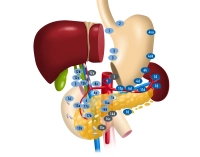
    173_PM1_Lymphadenektomie_Heiss

    The lymph node dissection of compartments I and II is referred to as D2-LAD and represents the standard lymphadenectomy for gastric carcinoma. It can be considered the gold standard.

    Based on the Japanese classification (numbering), the lymph nodes are grouped into several compartments. The D1 lymph nodes include stations 1 to 6, the D2 compartment additionally includes stations 7 to 11.

    The lymph nodes of station 12 are usually included in the oncological resection for distally located carcinomas on the lesser curvature. The lymph nodes at the main bile duct (station 12b, considered M1) are often not dissected to avoid injury/devitalization of the duct.

    The D3 compartment contains groups 12 to 15 and are not considered regional lymph node stations of the stomach by definition. Since they are prognostically evaluated as distant metastases, they are classified as M1 LYM when affected.

    To achieve a classification of pN0, the UICC requires a minimum of 16 regional lymph nodes to be examined. The German S3 guideline specifies an intended lymph node count of ≥ 25.


    Special situation early gastric carcinoma/ Indications for endoscopic resection
    An early gastric carcinoma is defined as a tumor that is confined to the mucosa and submucosa of the gastric wall, regardless of lymph node status, surface extent, and distant metastasis. The muscularis propria of the stomach is tumor-free by definition.

    Differences in early carcinomas are seen in the frequency of potential lymph node metastasis. Tumors that have already infiltrated the deep mucosal layers (m3) or submucosa are not suitable for endoscopic therapy, as there is a 4-20% probability of lymph node metastasis. 

    About 5% of patients show an early gastric carcinoma of the mucosal type (pT1/2m), where a curative treatment approach through endoscopic resection is possible, as the probability of lymph node metastasis is extremely low. Affected patients have an excellent prognosis with a five-year survival rate of > 90%.

    The following criteria must be met for an endoscopic resection:

    • Lesions < 2 cm in size in elevated types
    • Lesions up to 1 cm in size in flat types
    • Histological differentiation grade: good or moderate (G1/G2)
    • No macroscopic ulceration
    • Invasion limited to the mucosa

    In the presented case, it is a carcinoma in the gastric corpus. A gastrectomy with D2 lymphadenectomy is performed. The reconstruction is carried out as a Roux-en-Y reconstruction without a pouch. This is the most commonly performed reconstruction procedure in Germany.

  2. Contraindications

    • Relevant comorbidities with inability for surgery or anesthesia
    • Unresectable tumor with proximal infiltration of the superior mesenteric artery or the celiac trunk
    • Any form of metastasis, except within the framework of studies and multimodal treatment concepts in the case of oligometastasis.
    • Portal vein thrombosis or other conditions with pronounced venous collateral circulation (liver cirrhosis).
    • In the case of passage obstruction or endoscopically uncontrollable tumor bleeding, gastrectomy may be indicated as a palliative procedure.
  3. Preoperative Diagnostics

    Mandatory:

    • Blood chemistry laboratory tests with so-called tumor markers (CA 72-4, CA 19-9, CEA)
    • Esophagogastroduodenoscopy with step biopsies (at least 8 samples)
    • Ultrasound of the abdomen including the pelvis; according to S3 guidelines, the first imaging procedure for assessing liver metastases.
    • Endosonography for assessing the T-stage, particularly for evaluating early gastric carcinoma (mucosal/submucosal type). Identification of risk constellations uT3/4 N+ or perigastric ascites detection. The assessment of lymph nodes in category N1 – 2 is possible, however with limited sensitivity and specificity.
    • CT of the thorax (detection of lung metastases), abdomen, and pelvis

    Optional:

    • Staging laparoscopy: Since peritoneal metastasis cannot yet be reliably excluded by imaging procedures and the radiological Peritoneal Cancer Index (PCI) often underestimates the actual spread, diagnostic laparoscopy is generally recommended for patients with locally advanced gastric carcinoma (T3–T4) before starting neoadjuvant chemotherapy. In up to 40% of cases, peritoneal metastasis is revealed. In addition to enabling histological confirmation of peritoneal metastases, diagnostic laparoscopy helps minimize unnecessary open exploratory attempts.
    • To enable complete parietal peritonectomy in the event of peritoneal metastasis, trocars should always be placed in the linea alba during diagnostic laparoscopy. Typically, two trocars are sufficient, a 10 mm trocar for optics and a 5 mm trocar for the biopsy forceps. Any trocar metastases that occur later can be easily removed during a median laparotomy.
    • Peritoneal lavage with cytology can be performed additionally. The probability of metachronous peritoneal metastasis is about 80% in the presence of positive lavage cytology. Studies are underway to identify patients who, despite a macroscopically negative finding, may benefit from additional therapeutic measures (HIPEC).
    • MRI should be reserved for patients who cannot undergo CT.
    • PET-CT is not routinely recommended for the staging of gastric carcinomas.
  4. Special Preparation

    According to the S3 guidelines and current data, neoadjuvant chemotherapy is an integral part of the treatment concept for gastric carcinoma. In the diagnosis of gastric carcinomas of stages II and III (cT1/cT2N+ and cT3/resectable cT4Nx), perioperative chemotherapy "should" be performed. This is typically started preoperatively (neoadjuvant) and continued postoperatively. This can increase the R0 resection rate, reduce the systemic recurrence rate, and improve the overall prognosis. As a perioperative concept, the FLOT regimen (5 Fluorouracil, Leucovorin, Oxaliplatin, Docetaxel) has been established in Germany and increasingly internationally. However, the prognostic value (over-treatment or meaningful concept) remains debated. Gockel I, Lordick F. Neoadjuvant chemotherapy in gastric carcinoma. Chirurg. 2020 May;91(5):384-390.

    After completion of neoadjuvant therapy, it is recommended to assess the response using CT and endoscopy.

    In planned preoperative chemotherapy a port implantation is recommended.

    Laparoscopic exploration is optional, see Diagnostics.

    If necessary, initiate preoperative nutritional therapy in patients who have significantly lost weight preoperatively. A nutritional concept should be developed early, preferably at the beginning of multimodal therapy. In addition, patients without signs of malnutrition should also be motivated to take balanced oral nutritional supplements preoperatively for 5–7 days in addition to their normal diet.

    On the day before surgery, perform bowel cleansing measures, current blood chemistry laboratory tests, determine blood type, and order erythrocyte concentrates.

    Thrombosis prophylaxis (LMWH (Low Molecular Weight Heparin), anti-thrombosis stockings) (see guideline for thrombosis prophylaxis in section 1.10).

  5. Informed consent

    General surgical risks:

    • Thrombosis, pulmonary embolism
    • Pneumonia
    • Heparin intolerance, HIT
    • Urinary tract infection

    Specific surgical risks:

    • Mortality between 2 and 10%
    • Final decision on the resection procedure only intraoperatively
    • Injury to internal vessels and organs (including pleura!)
    • Anastomotic insufficiency
    • Duodenal stump insufficiency
    • Endoluminal/intra-abdominal bleeding
    • Reduced blood flow to the gastric substitute
    • Intra-abdominal abscess, peritonitis
    • Pancreatitis or pancreatic fistulas
    • Wound healing disorder
    • Incisional hernia

    Possibly required extension of the procedure:

    • Cholecystectomy
    • Resection of liver metastases
    • Splenectomy

    Indications of:

    • Temporary weight loss
    • Changed eating habits
    • Drains, gastric tube, urinary diversion
    • Possibly blood transfusion
  6. Anesthesia

    • Intubation anesthesia
    • Nasogastric tube
    • CVC (Central Venous Catheter)
    • Epidural catheter (Peridural catheter)
    • Indwelling catheter (transurethral) or intraoperative SPC (suprapubic bladder catheterization)
  7. Positioning

    Positioning
    • Supine position
    • Right arm adducted
    • Left arm abducted
  8. OR Setup

    OR Setup
    • Surgeon on the right side of the patient
    • 1st assistant on the left side of the patient
    • 2nd assistant on the right, towards the head of the surgeon
    • Scrub nurse on the left, towards the feet of the 1st assistant
    • Possibly 3rd assistant on the left, towards the head of the 1st assistant
  9. Special instruments and holding systems

    In addition to the basic abdominal surgical instruments, the following additional equipment is required:

    • Abdominal wall retractor (Ulmer cable retractor + rods, Mercedes spreader)
    • Silicone loops for encircling anatomically important structures
    • Linear cutter possibly with different magazine lengths
    • Circular stapler 25mm
    • Catheter jejunostomy set
  10. Postoperative Care

    Postoperative Analgesia: via epidural anesthesia, supportive intravenous analgesia. Follow the link to PROSPECT (Procedures Specific Postoperative Pain Management). Follow the link to the current guideline Treatment of Acute Perioperative and Post-Traumatic Pain.

    Medical Follow-up:

    • Intensive care monitoring (at least 24 hours)
    • Remove intra-abdominal target drains depending on the amount of discharge
    • Optionally, on the 5th-7th postoperative day, a gastrointestinal passage X-ray or an endoscopic check of the anastomotic conditions may be performed.
    • If splenectomy is performed: Vaccination against Streptococcus pneumoniae, Haemophilus influenzae, and meningococci!
    • Gastrectomy: lifelong parenteral substitution of Vitamin B12; if fatty stools occur, administration of pancreatic enzymes is indicated.
    • After preoperative chemotherapy, the decision on postoperative chemotherapy should be made interdisciplinary depending on the degree of regression, clinical response, tolerability, and general condition. According to current German guidelines, it is recommended not to continue chemotherapy postoperatively in case of progression.
    • Follow-up: Upper abdominal tumors generally have a poor prognosis. Therefore, there was long no consensus on how follow-up should be conducted. Through increasingly potent, multimodal therapy concepts, patients with limited metastasis may possibly gain a second chance of cure through follow-up. For the first time, the current guideline recommends structured follow-up. It includes clinical and endoscopic as well as imaging control. The intervals should be at least semi-annually in the first 2 years and then annually until the 5th year.

    Thrombosis Prophylaxis: Early mobilization, compression stockings, low molecular weight heparin. Due to the major surgery, there is a high risk of thromboembolism. Note: kidney function, HIT II (history, platelet control). Follow the link to the current guideline Prophylaxis of Venous Thromboembolism (VTE).

    Mobilization: Physical rest until wound healing is complete.

    Physiotherapy: Early mobilization, breathing exercises

    Dietary Progression: Start with sips of tea from the 1st postoperative day. Traditionally, dietary progression begins cautiously with soup after 3-4 days. The catheter jejunostomy can be started with tea at 30ml/h from the 2nd postoperative day, consisting of half tea and half enteral nutrition solution from the 3rd postoperative day, and the amount can be increased.

    Bowel Regulation: If bowel movement does not occur spontaneously after 3-4 days, a mild laxative can be used.

    Incapacity for Work: Incapacity for work generally covers a minimum of 4 weeks.