Start your free 3-day trial β€” no credit card required, full access included

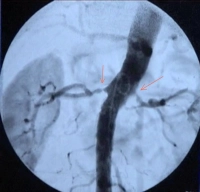
Perioperative management - Percutaneous transluminal angioplasty with stent implantation for bilateral renal artery stenosis

  1. Indications

    PM 316-1
    • High-grade renal artery stenosis (>70%), unilateral or bilateral, with the aim of organ preservation (indication in the video example)
    • Renal artery stenosis in a functionally solitary kidney
    • Fibromuscular dysplasia of the renal arteries with stenosis and hypertension
    • Difficult-to-control arterial hypertension in renal artery stenosis

    Asymptomatic renal artery stenoses (even bilateral ones) do not require angioplasty.

    In unilateral stenosis and impaired global renal function, the kidney downstream of the stenosis has usually been spared the elevated blood pressure, whereas the kidney with a normally patent artery has been damaged by chronic hypertension (renin–angiotensin mechanism). Often, renal artery dilatation of the unilateral stenosis can then lead to an improvement in the function of the poststenotic kidney.

    In kidneys with a longitudinal diameter of less than 8 cm and/or proteinuria >1 g/day, revascularisation of the renal artery is not promising.

    (see also Leitlinie - S2K Erkrankungen der Nierenarterie [Consensus S2 Guideline – Disorders of the renal artery])

  2. Contraindications

    • ASA IV
    • Incurable malignancy
    • Endovascular intervention: unsuitable access vessels
  3. Preoperative diagnostic work-up

    Thorough vascular surgical and angiological examination:

    • Pulse status, Doppler of the legs, colour flow Doppler ultrasonography of the carotid arteries
    • Abdominal duplex ultrasonography with assessment of blood flow in the renal artery and renal parenchyma
    • Duplex ultrasonography of the potential access vessels
    • Separate renal clearance for each kidney (scintigraphy)
    • MR angiography of the renal aortic segment (orientation of the renal arteries → cephalic, caudal)

    Also:

    • Chest X-ray
    • Echocardiography (left ventricular function and wall thickness)
    • ECG, possibly exercise ECG (signs of ischaemia)
    • Laboratory panels (full blood count, coagulation, blood lipids, electrolytes, renal function tests)
    • Clinical examination of the access region (e.g. inguinal infection)
  4. Special preparation

    • Mark the side of the renal artery stenosis on the patient before surgery
    • Depilation of the abdomen and both groins
    • Have the patient fast for 6 hours preoperatively
    • As the procedure may last several hours → indwelling urinary catheter (if the procedure is performed under local anaesthesia, a painfully full urinary bladder makes the patient restless and can also trigger vagal or cardiac sensations)
  5. Informed consent

    • Change of access route, e.g. transfemoral -> transcubital
    • Allogeneic blood transfusion, hepatitis, HIV
    • Allergic reaction, e.g. to contrast media
    • Contrast-induced nephropathy, possibly lifelong dialysis
    • Haematoma/secondary bleeding from the groin
    • Vascular dissection in the femoral or iliac arteries, possibly requiring open surgical repair
    • AV fistula formation, pseudoaneurysm in the groin requiring surgical repair
    • Inguinal infection, deep infection, sepsis
    • Injury to the femoral nerve
    • Failed renal artery dilation with perforation or dissection → conversion to open abdominal exposure, vein graft harvesting, e.g. from the leg
    • Perforation of the renal parenchyma and renal haemorrhage requiring open exposure; possibly nephrectomy if haemorrhage cannot be controlled
    • Stent malposition, secondary stent migration → possibly surgical repair
    • Elimination of the renal artery stenosis → hypotension, cerebral ischaemia (rare)
Anaesthesia

Local anaesthesiaRegional anaesthesiaGeneral anaesthesia ... - Operations in general, visceral and

Activate now and continue learning straight away.

Single Access

Activation of this course for 3 days.

US$9.30  inclusive VAT

Most popular offer

webop - Savings Flex

Combine our learning modules flexibly and save up to 50%.

from US$4.30 / module

US$51.61/ yearly payment

price overview

vascular surgery

Unlock all courses in this module.

US$8.60 / month

US$103.20 / yearly payment

to top